This post contains affiliate links. Please see our disclosure policy.
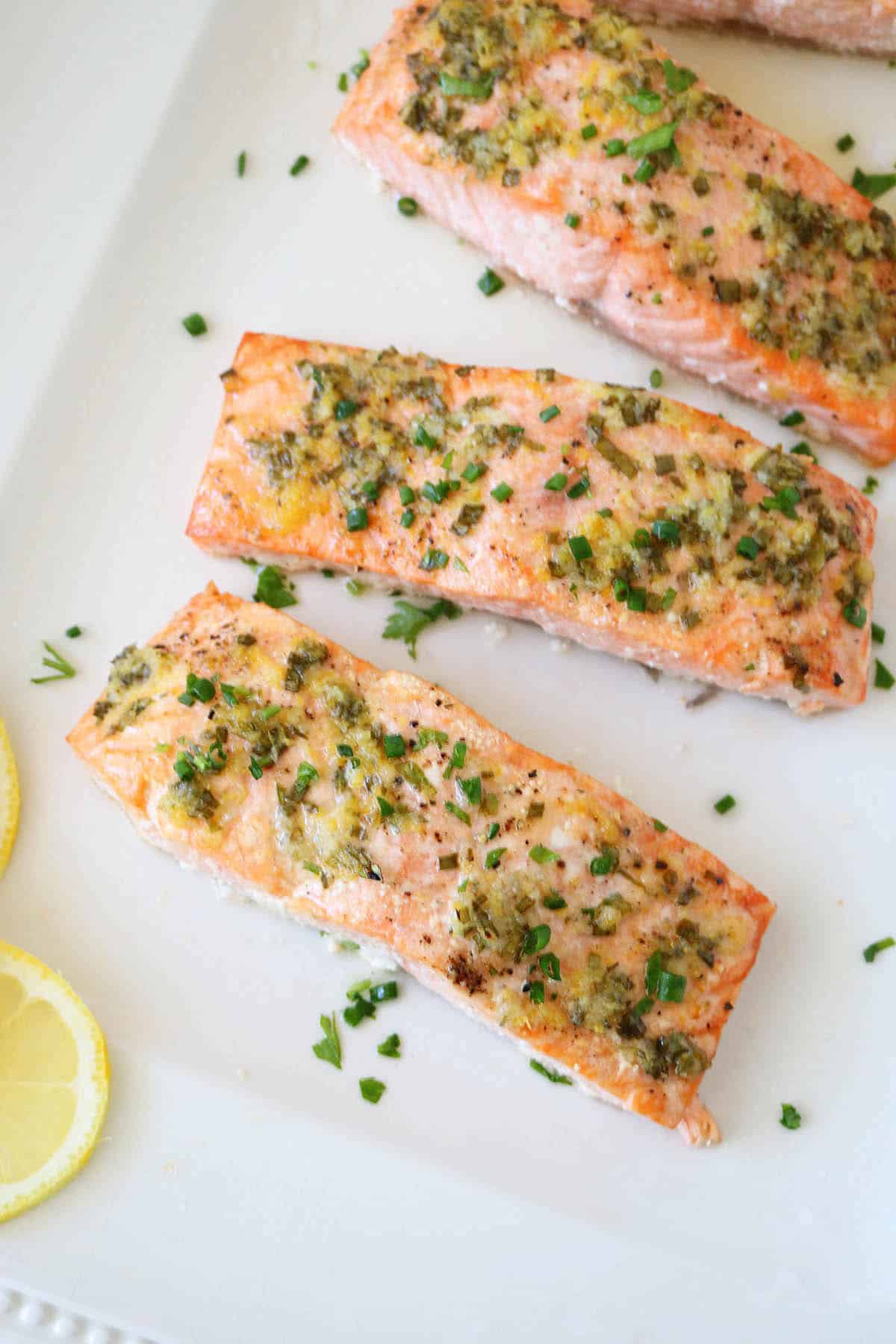
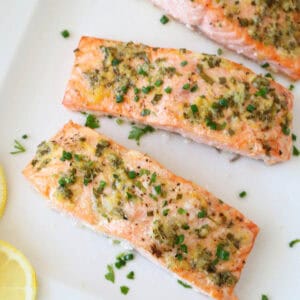
This Oven-Baked Salmon with Lemon, Garlic, and Fresh Herbs is essential for anyone looking for a simple weeknight meal or a sophisticated dish to impress guests. Its ease of preparation makes it a versatile choice for any occasion.
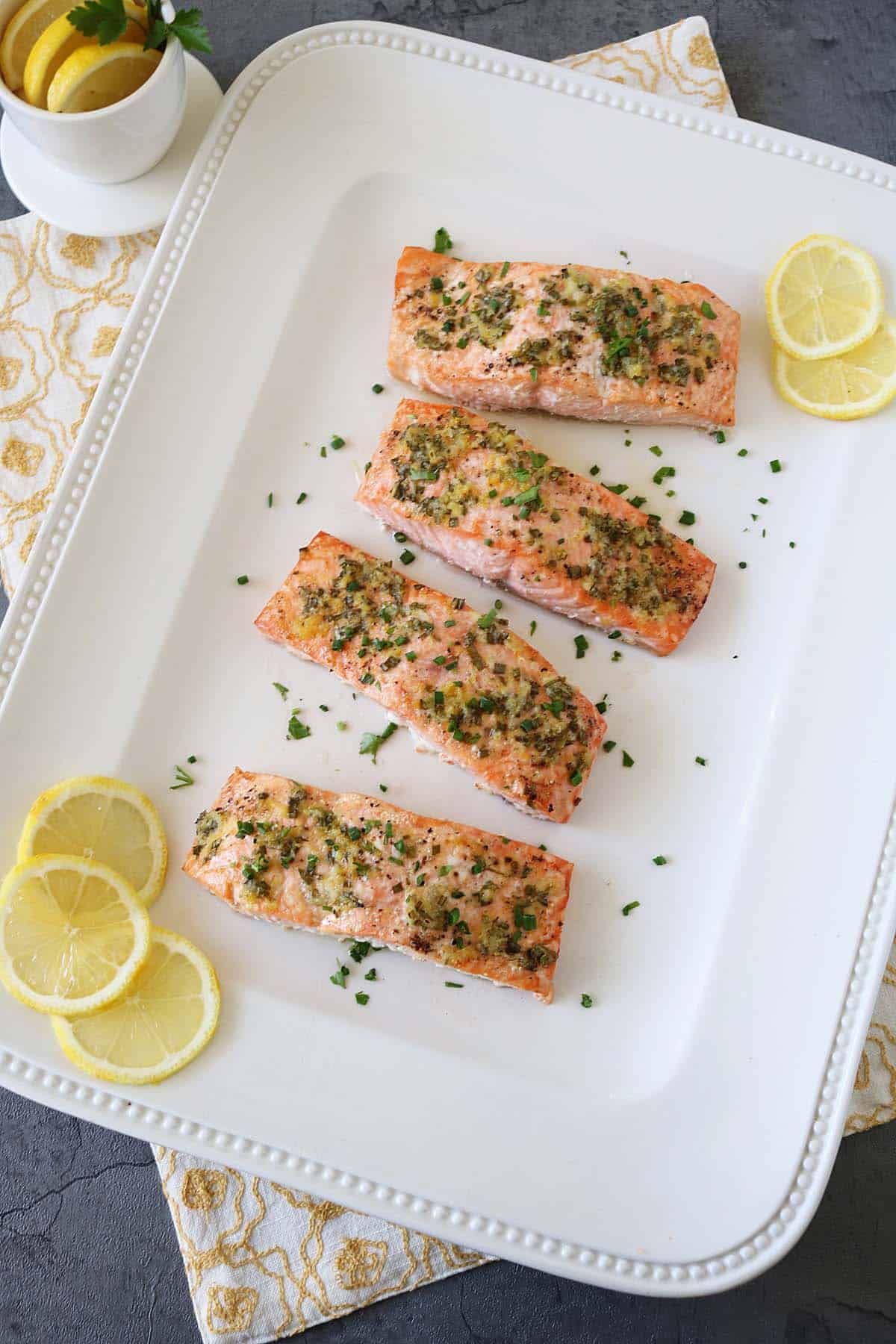
Why You’ll 🫶🏻 this Salmon
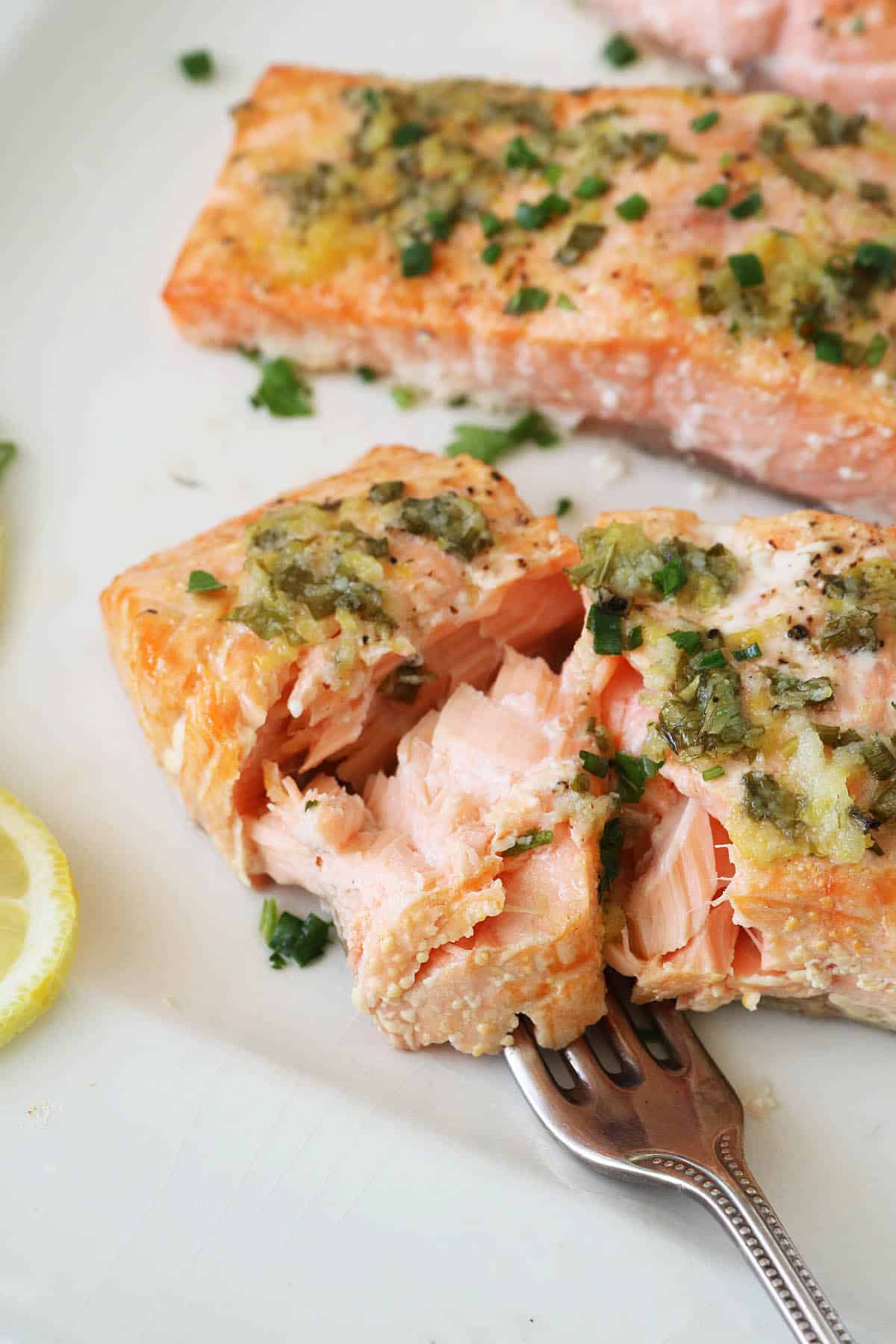
This amazing oven-baked salmon elevates everyday ingredients, creating flavors that rival those of a fine-dining experience. The salmon turns out incredibly tender and juicy, infused with the bright notes of lemon, garlic, and fresh herbs. Simply season the fish, place it in the oven, and watch as it transforms into a culinary delight. I enjoy pairing it with a side of vegetables or a crisp salad, making it a simple yet impressive meal that gives me the satisfaction of feeling like a chef with minimal effort. Happy cooking! ~Nicole
Key Ingredients for Oven-Baked Salmon with Lemon, Garlic, and Fresh Herbs
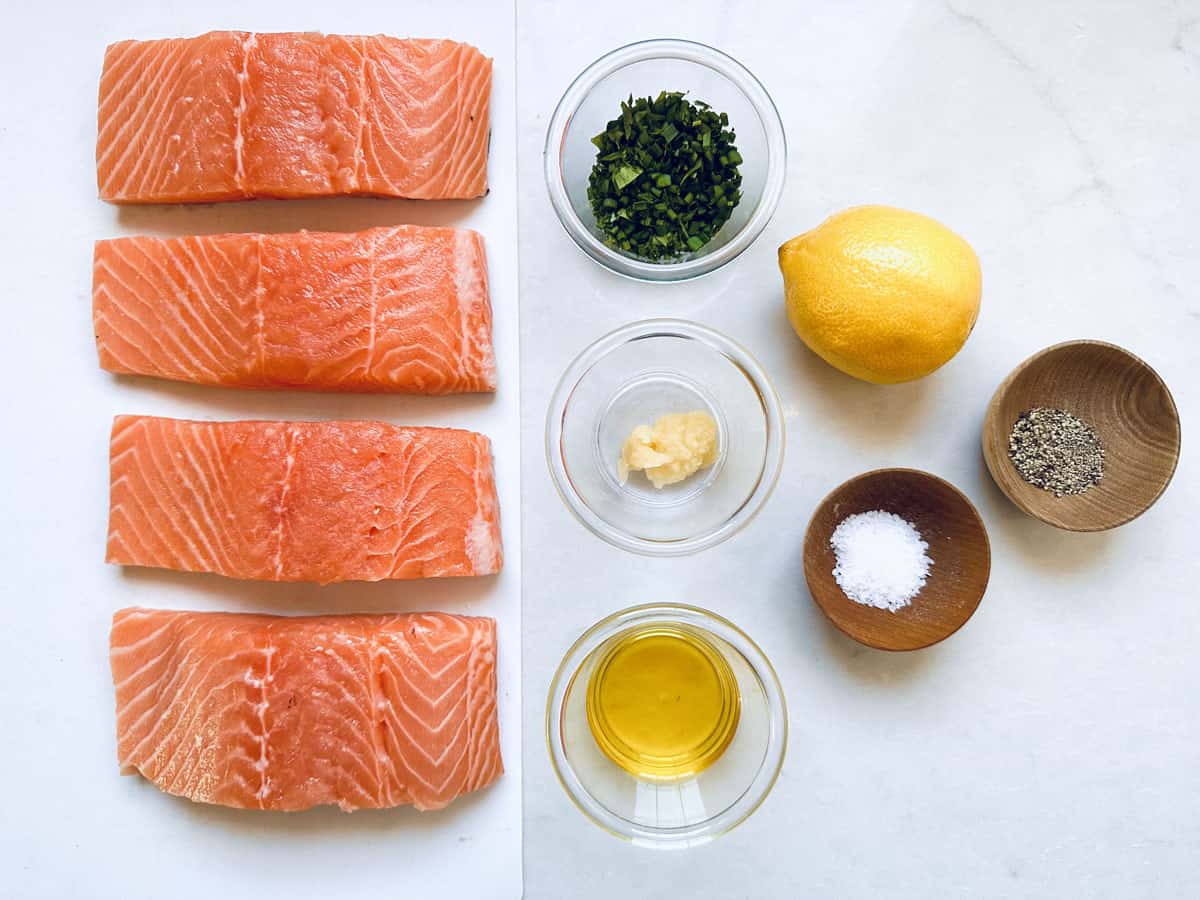
Salmon Filets are the key ingredient. When buying salmon filets, I usually prioritize wild-caught and sustainably sourced options, ideally from the Pacific or Alaskan waters. For this recipe, farm-raised Atlantic salmon is my go-to choice for its mild and buttery flavor and availability. Look for skin that is bright and silvery, with flesh that appears shiny and moist, while steering clear of any filets that emit a strong fishy odor. Choosing vacuum-sealed salmon can also help ensure maximum freshness.
Lemon Zest and Juice add a vibrant, tangy flavor to baked salmon, elevating its inherent taste. The zest releases aromatic oils into the flesh, while the juice adds acidity that counterbalances the fish’s richness.
Garlic brings a rich and fragrant flavor that pairs wonderfully with fish. It can be finely minced or grated on a microplane (which I prefer).
Fresh Herbs add more flavor to the fish during cooking by releasing their aromatic properties and infusing the baked filets with a delicate taste.
Equipment Needed
- Fine Microplane zester
- Small citrus juicer
- 17.9-inch x 12.9-inch rimmed baking sheet
- Silicone brush
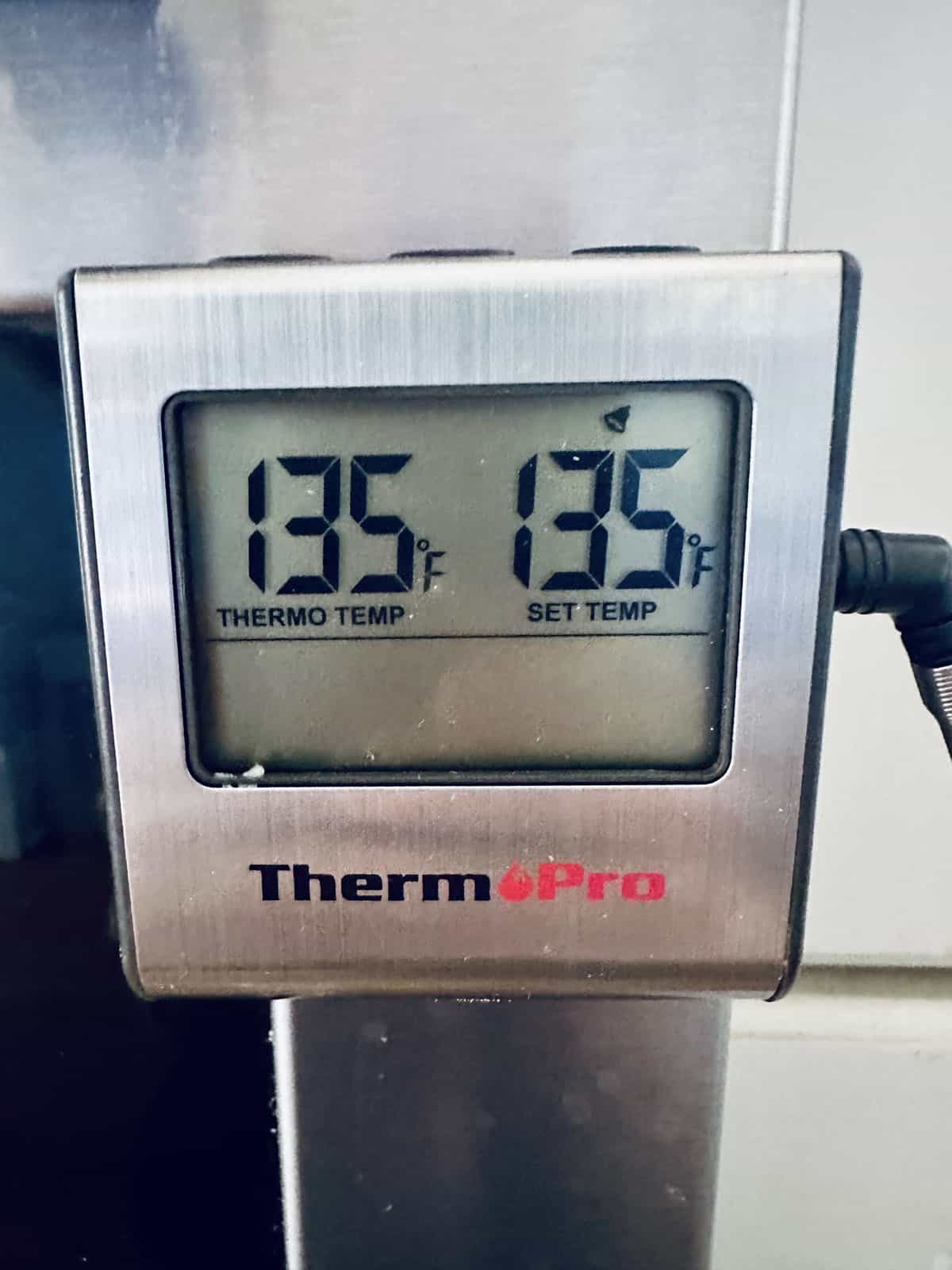
- Digital cooking thermometer
Tips for Making Oven-Baked Salmon with Lemon, Garlic, and Fresh Herbs
Before you begin, always check the salmon for any pin bones and remove them. I prefer to keep the skin on when using this method, as it keeps the fish intact, adds flavor, and is easy to remove when served, but you can remove the skin or ask the fishmonger to do it for you (it is a matter of personal preference).
Place the oven rack in the middle of the oven and preheat the oven to 400℉. Line a rimmed baking sheet with aluminum foil.
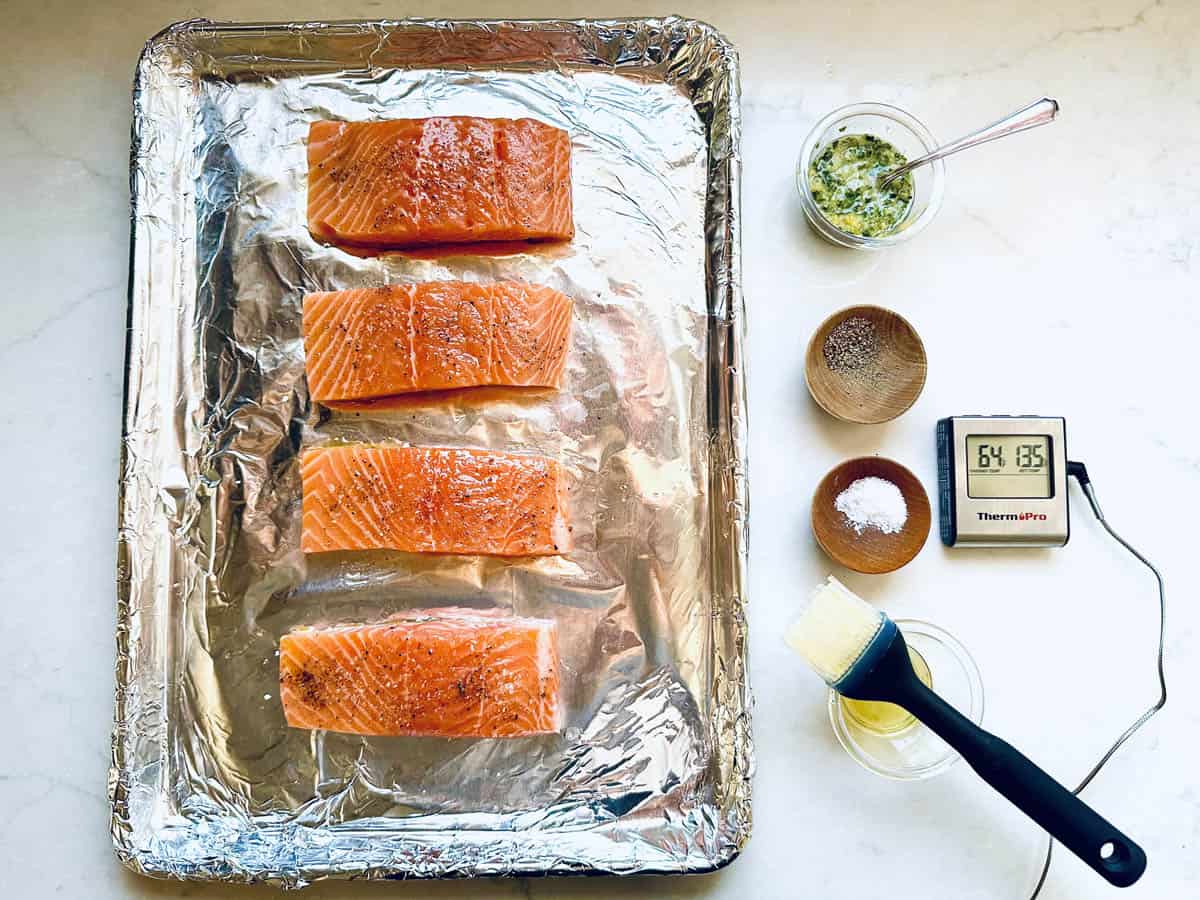
- In a small bowl, combine the lemon zest, juice, garlic, and herbs. Pat the salmon dry with paper towels. Using a silicone brush, brush them all over (including the skin) with olive oil, and then place them skin-side down on the prepared baking sheet. Season with salt and pepper.
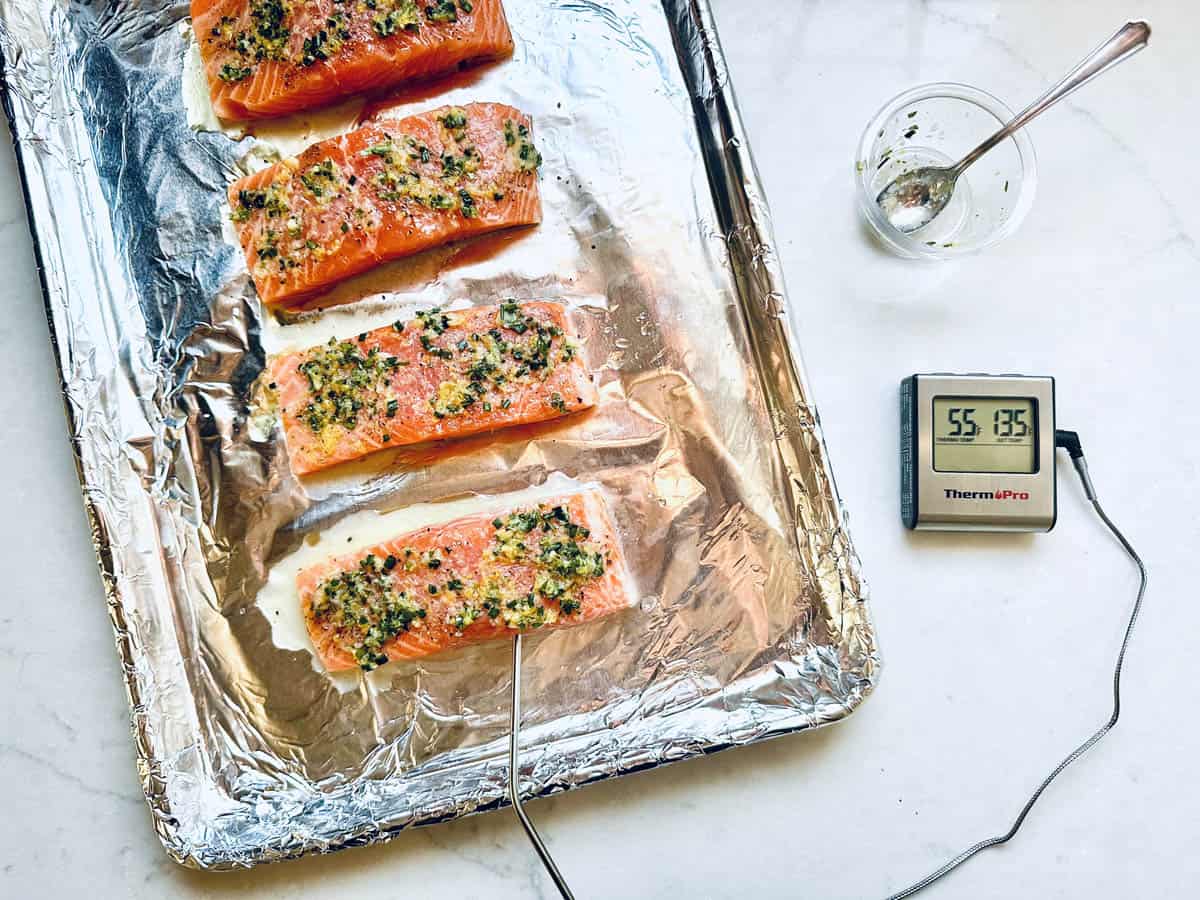
- Evenly spoon the lemon mixture over the tops of the filets. Insert the digital thermometer into the thickest part of a filet.
- Bake for 12-15 minutes or until the digital thermometer registers 125℉-130℉ for medium-rare or 130℉-135℉ for medium. Note- the FDA recommends a temperature of 145℉ for well-done if there are any food safety concerns.
Substitutions
- Substitute the salmon filets with other fatty fish, such as trout or Arctic char, which offer comparable omega-3 content and texture. It is advisable to slightly adjust the cooking time based on the thickness of the fillets.
- Substitute the olive oil with coconut oil for another dairy-free alternative and a different flavor profile. Butter can also substitute the olive oil; simply use the same quantity as specified in the recipe.
- Garlic powder or Garlic Confit can be used instead of fresh garlic. When substituting, use ¼ teaspoon of garlic powder per clove, or 1-2 smashed confit cloves for a fresh clove.
- Substitute the parsley and chives with other herbs and flavors, like dill, thyme, or even the white and green parts of minced scallions.
Serving Suggestions
There are many serving options to enjoy alongside or with oven-baked salmon. Here are some ideas for sides.
- Roasted Asparagus with Shallots and Chives
- Roasted Broccoli with Garlic and Lemon
- Braised Spring Vegetables
- Spring Vegetable Risotto
- Potato Stacks with Garlic and Fresh Thyme
Here are some salad ideas to serve with oven-baked salmon.
Yes. You will need to check with your air fryer manual for cooking temperatures and times, since every air fryer is different.
Other salmon recipes you might enjoy…

“As an Amazon Associate, I earn a commission from qualifying purchases that you make from the links within my posts and recipe cards with no added cost to you.”
Oven-Baked Salmon with Lemon, Garlic, and Fresh Herbs
Equipment
Ingredients
- 1 tablespoon lemon zest
- 2 tablespoons freshly squeezed lemon juice
- 1 medium garlic clove, finely grated on a Microplane
- 1 tablespoon finely chopped fresh herbs, such as parsley and chives, plus more for garnish
- 4 (6 ounce) skin-on salmon filets, checked for pin bones
- 2 tablespoons Extra-virgin olive oil
- ½ teaspoon kosher salt
- ¼ teaspoon freshly ground black pepper
Accompaniments
- Lemon wedges for serving
Instructions
- Place the oven rack in the middle of the oven and preheat the oven to 400℉ (200℃). Line a rimmed baking sheet with aluminum foil. In a small bowl, combine the lemon zest, juice, garlic, and herbs.
- Pat the salmon dry with paper towels. Using a silicone brush, brush them all over (including the skin) with olive oil, and then place them skin-side down on the prepared baking sheet. Season with salt and pepper. Evenly spoon the lemon mixture over the tops of the filets. Insert the digital thermometer into the thickest part of a filet.
- Bake for 12-15 minutes or until the digital thermometer registers 125℉-130℉ for medium-rare or 130℉-135℉ for medium. Note- the FDA recommends a temperature of 145℉ for well-done if there are any food safety concerns. Garnish with a sprinkle of fresh chopped herbs and serve with lemon wedges. Enjoy!
Notes
Nutrition
Nutrition information is automatically calculated, so should only be used as an approximation.